
Generator Parallel Operation: When and Why You Need It
Parallel operation lets two or more generator sets run together on a common bus, sharing the load automatically. It is the standard approach when you need N+1 redundancy, modular growth, or a power rating above what a single practical set delivers — and it is far more flexible than buying one oversized generator.
SummaryParallel generators are no longer a niche option for huge industrial plants. Modern automatic synchronizing controllers let 2–16 sets run as one power system, with load sharing, redundancy and remote monitoring built in. This guide explains how generator parallel operation works, when it beats a single large set, the key components, and what to specify when you order.
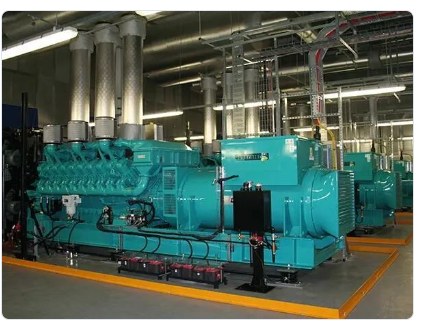
What Is Generator Parallel Operation?
Generator parallel operation means connecting two or more generator sets to a common electrical bus so they run simultaneously and share the connected load. The sets must match in voltage, frequency, phase sequence and phase angle before their breakers close — this is called synchronizing. Once synchronized, the controllers divide the load between the machines so no single set carries more than its fair share.
Manual synchronizing on older systems required an operator watching a synchroscope. Today's automatic paralleling panels do it in seconds — they sense voltage, frequency and phase angle, adjust the governor and AVR of the incoming set, and close the breaker only when the two systems match.
Why Not Just Buy One Big Generator?
For loads under about 500 kVA, a single set is usually the simplest and cheapest choice. But once you move into larger or more critical sites, paralleling several smaller sets often wins on cost, space, reliability and flexibility:
- Redundancy (N+1 / N+2) — if one set fails or needs service, the others keep the load up. A single 2000 kVA set has no such fallback.
- Modular growth — start with what you need today and add a set next year as the load grows, instead of over-sizing on day one.
- Better efficiency at part load — a single 2000 kVA set running at 30% load burns fuel poorly and can wet-stack. A parallel system starts only the number of units needed, so each runs closer to its efficient load band.
- Transport and installation — a 2000 kVA set is heavy and needs a specialized rig. Two 1000 kVA sets ship and install with standard logistics.
- Maintenance without shutdown — you can take one set offline for an oil change or repair while the rest carry the load.
The Three Operating Modes
Island (Off-Grid) Operation
Several generators run in parallel and supply an isolated load with no utility connection — typical for mines, remote factories, islands and construction sites. One set acts as the "reference" (frequency leader); the rest follow and share load. If the load rises, more sets start automatically; when it falls, units drop off.
Grid-Parallel (Stand-by with Mains Tie)
Generators run in parallel with the utility grid. In normal operation the grid carries the load; if the grid fails, the generators start and take over (or keep running in island mode). This is the most common setup for data centers, hospitals and commercial complexes where the grid is unreliable.
Multi-Generator Grid-Parallel
Several sets parallel both with each other and with the grid, allowing export of surplus power, peak shaving or demand response. This mode needs a grid-connection (anti-islanding) module that meets local utility codes.
| Mode | When You Use It | Key Hardware |
|---|---|---|
| Island / Off-grid | Mines, remote sites, islands | Auto-sync + load sharing |
| Grid-parallel (standby) | Data centers, hospitals, factories | ATS + sync + AMF controller |
| Multi-gen grid-parallel | Peak shaving, export, microgrids | Grid-connection protection module |
The Core Components of a Parallel System
A working paralleling installation needs four layers of hardware and control:
- AMF controller — starts the set on mains failure, monitors engine and alternator parameters, handles alarms. Common models: SmartGen HGM6120, ComAp AMF25, Deep Sea DSE7320.
- Synchronizing module — matches voltage, frequency and phase before closing the breaker. Models: SmartGen HGM9510, ComAp IG-NTC-GC, Deep Sea DSE8610.
- Grid-connection module — anti-islanding protection, reverse power, synchronism check for grid-tied operation. Models: SmartGen HGM9520, ComAp IM-NT, Deep Sea DSE8620.
- Multi-generator paralleling controller — coordinates the whole group: load-dependent start/stop, base-load modes, N+1 rotation. Models: SmartGen HGM9560, Deep Sea DSE8660.
On the power side, each generator feeds an air circuit breaker (ACB) onto a common busbar, often through step-up transformers for medium-voltage output in larger plants.
How Many Sets Should You Parallel?
Modern systems handle 2 to 16 units on one bus. Practical rules of thumb:
- 2 units (1+1) — for sites that need simple redundancy; both equal size, one runs, one stands by.
- 3 units (2+1) — most common for critical loads: any two carry the full load, the third is spare.
- 4 units (2+2 or 3+1) — for data centers and Tier III/IV facilities where dual redundancy is required.
- 6–16 units — for multi-megawatt plants, mines and utilities, often in containerized power stations.
There is no benefit to paralleling more sets than the load and redundancy requirement justify — every added set adds control complexity and a point of failure on the bus.
What to Specify When You Order
When you ask a supplier for a parallel system, give them these parameters so the quote matches your site:
- Total installed load in kW, with peak and minimum values.
- Redundancy target — N+1, N+2 or no redundancy.
- Operating mode — island, grid-parallel standby, or export/peak-shaving.
- Voltage and frequency — 400 V / 480 V low voltage, or 6.3–11 kV medium voltage.
- Communication — Modbus RTU/TCP, Ethernet SNMP, or a specific BMS/SCADA protocol.
- Enclosure — open type, silent canopy, or containerized.
Frequently Asked Questions
Send us your total load, redundancy target and operating mode — we configure 2–16 unit parallel systems with SmartGen, ComAp or Deep Sea controls. Email [email protected] or message us on WhatsApp.