
How to Size a Diesel Generator: Load Calculation and Rating Guide
Size the diesel generator around your real connected load and peak demand, not a rough guess. Convert kW to kVA at the site power factor, add margin for motor starting, altitude, heat and future growth, then choose between a standby and a prime-power rating. An undersized set trips under peak load; an oversized set wastes fuel, runs inefficiently and can shorten engine life.
SummaryThis guide walks through how to build a load schedule, read kW and kVA ratings, account for motor starting current and environmental derating, compare typical application sizes, and confirm the final specification with your generator supplier before the order is placed.
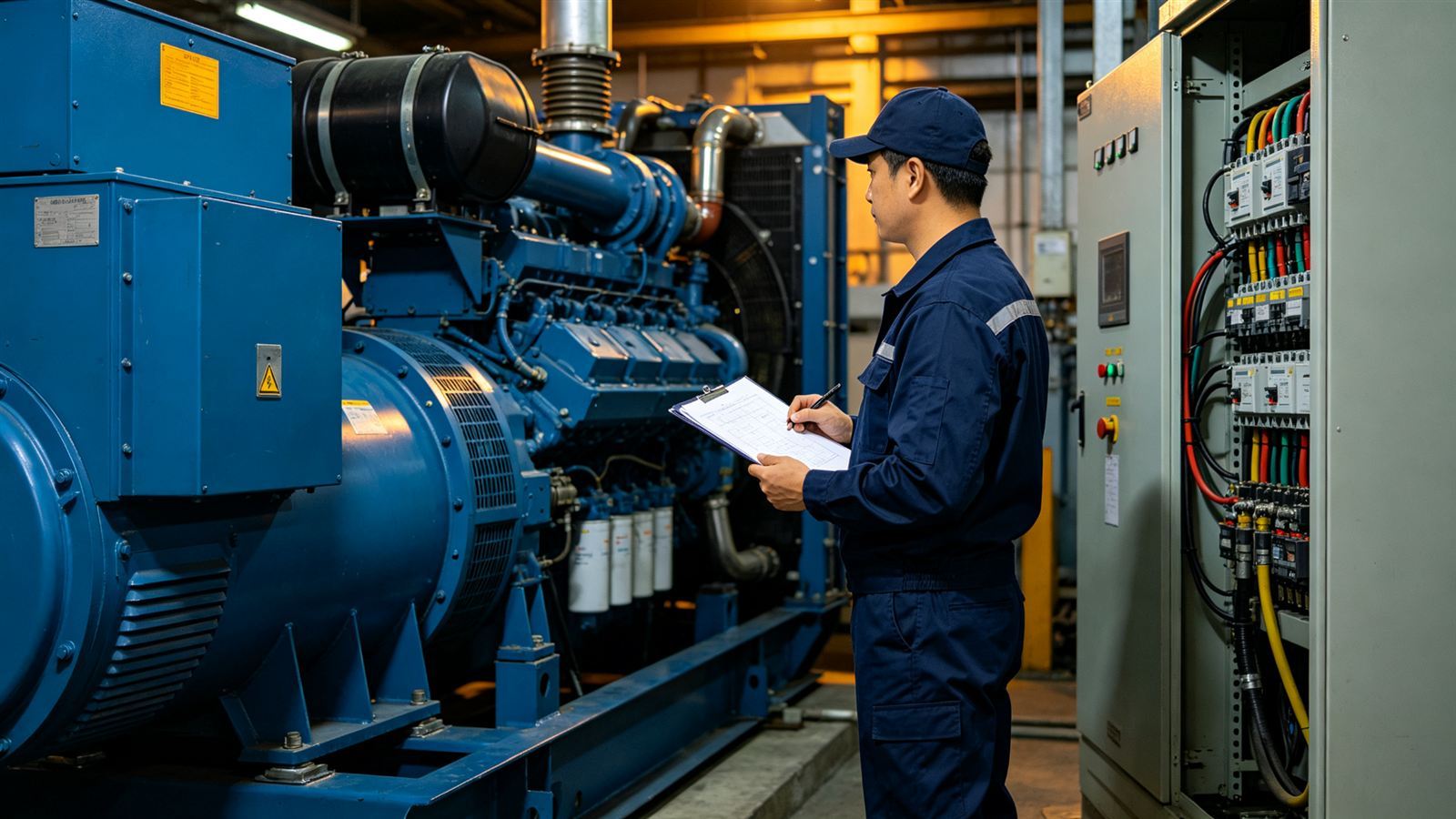
Why Sizing Is Where Most Purchases Go Wrong
Many buyers choose a diesel generator from a price list using one headline kVA figure, without mapping it to the equipment it will actually power. That shortcut leads to two opposite mistakes. A set that is too small cannot start motors or carry peak demand, producing voltage dips, nuisance shutdowns and damage to sensitive loads. A set that is too large runs at low load for long periods, which wastes fuel, raises maintenance cost and can promote wet-stacking.
Correct sizing balances present load, the largest starting peak, site conditions and planned expansion — and clarifies whether the unit is emergency backup only or continuous prime power, two duties that use different engine ratings.
Understand kW, kVA and Power Factor
kW vs kVA: the power factor relationship
Your equipment consumes real power, measured in kW (kilowatts). A generator nameplate is often quoted in kVA (kilovolt-amperes, apparent power). The two are linked by power factor (PF): kW = kVA × power factor. Most diesel gensets are rated at a typical power factor of 0.8, so a 500 kVA set delivers roughly 400 kW. When comparing quotes, match the alternator's available kW against your load kW rather than comparing kVA numbers alone.
Prime vs standby rating
A standby (emergency) rating covers infrequent outage hours at near-full load. A prime-power rating is built for continuous or 24/7 variable-load duty, and its continuous kW output is usually lower than the standby figure. Tell your supplier whether the generator will run only during mains failures or as a daily or continuous power source, because the rating and engine selection change with that duty.
Step-by-Step Load Calculation
List every connected load
Prepare a load schedule listing each device: rated kW or kVA, voltage, phase, power factor, starting method and expected running hours. Sum the running kW of equipment that operates together at the same time. Apply diversity where loads never run simultaneously — for example, lighting and a backup compressor rarely draw full load together.
Account for motor starting and peak demand
Electric motors draw several times their rated current when they start. A direct-on-line motor can pull roughly 3–6 times its rated current during acceleration, while soft starters or VFDs reduce that surge. Add the largest motor's starting contribution to the schedule, and confirm the alternator can hold a voltage dip that your sensitive loads — PLCs, servers, VFDs and instrumentation — will accept.
Apply margins and future growth
Add a reserve margin on top of the calculated continuous load, commonly around 10–25% for commercial and industrial sites, and more where load data is uncertain or expansion is planned. Also consider loads you may add within the equipment's service life, while avoiding a set that normally sits below roughly 30–40% load for long periods, which causes the low-running problems described above.
Typical Application Reference
The table below gives rough starting points only. Final rating must come from your own load schedule and site conditions.
| Application | Typical load range | Generator class | Sizing notes |
|---|---|---|---|
| Small commercial / office | 50–150 kW | Standby diesel | Cover lighting, HVAC and computers; check HVAC compressor starting current. |
| Construction site | 100–300 kW | Prime power | Tools, welders and hoists; account for welder duty and motor surges. |
| Industrial plant / process | 300–800 kW | Prime or standby | Machinery, pumps and compressed air; review load diversity and redundancy. |
| Data center / telecom | Sized from IT load plus cooling and UPS | N+1 standby | Sensitive electronics need a controlled voltage dip and reliable backup; see our data center backup power guide. |
Environmental and Duty Factors
Site conditions reduce usable engine output. High altitude lowers air density and high ambient temperature reduces cooling capacity; dusty, humid or salt-air environments also affect filtration and corrosion. The enclosure choice — open frame, silent canopy, trailer or container — changes the airflow margin you must design around. Share altitude, maximum summer temperature, humidity, dust, fuel type and enclosure preference so the supplier applies derating before the rating is quoted.
When Parallel Sets or Redundancy Make Sense
Where reliability is critical — a data center, hospital, mine or processing plant — or the load varies widely, several smaller parallel sets often beat one large unit. Paralleled gensets provide N+1/N+2 redundancy, better part-load efficiency and staged capacity that grows with the load. For an uneven profile where downtime cannot be tolerated, review auto-synchronizing and load-sharing control instead of an oversized single set.
Working with a Generator Supplier
A reliable China generator supplier confirms your load schedule, duty, voltage, frequency, ambient conditions and control requirements before building the set, and quotes both standby and prime kW/kVA figures rather than a single kVA headline. Lucency reviews your load list, recommends the rating and configuration — open, silent, trailer or container unit, controller and alternator brand — and shares reference data for your electrical engineer to work from.
Frequently Asked Questions
Send us your load list, voltage, frequency, site conditions and enclosure preference. We will recommend the right kW/kVA rating and configuration, and share reference data for your engineer. Email [email protected] or chat on WhatsApp.